

EGYPT COURT
After Ibn Battuta visited several cities on the Nile Delta, he continued on to Cairo, the largest capital of the Arabic-speaking world and the largest city anywhere in the world except those in China. Cairo was founded in the 10th century by the Fatamid dynasty. Life inside the walled city was crowded and frantic. The narrow streets were filled with people, camels and donkeys and lined with thousands of shops and markets.
On his way to Mecca, he traveled along the banks of the Nile and lodged at the homes of scholars, quadis (judges), and Sufis.
Major Court
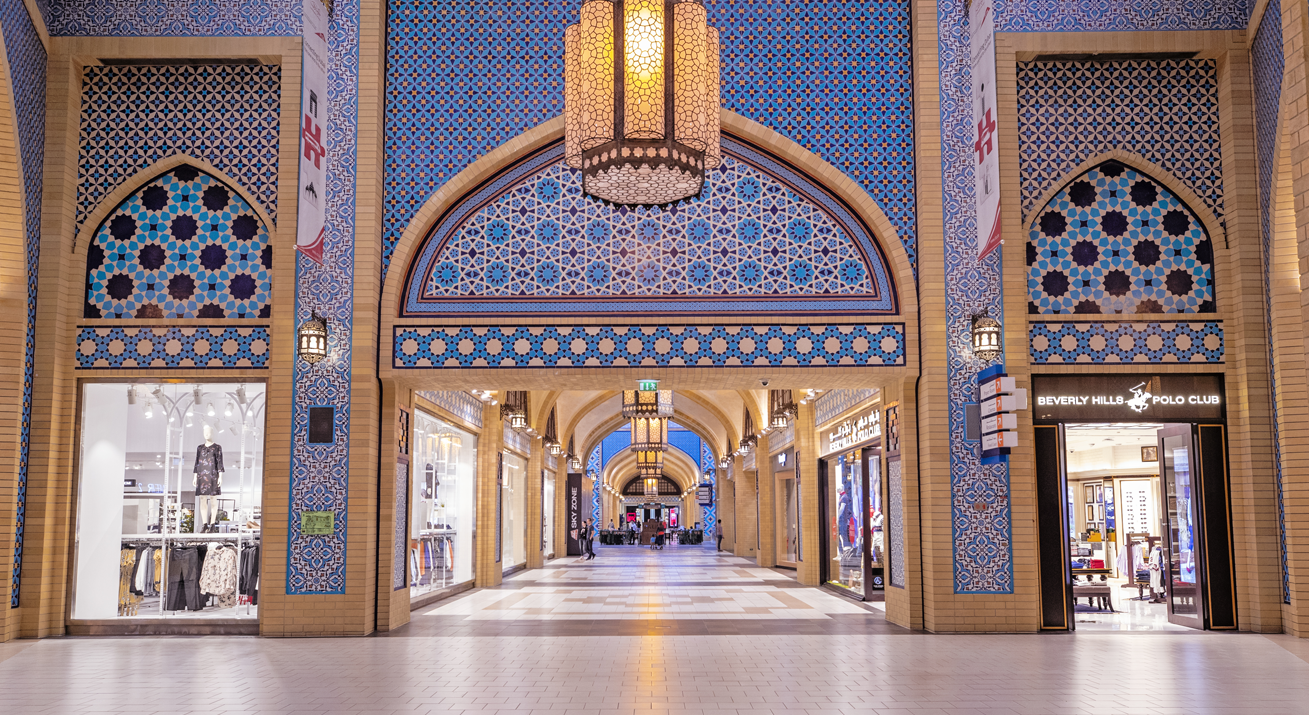
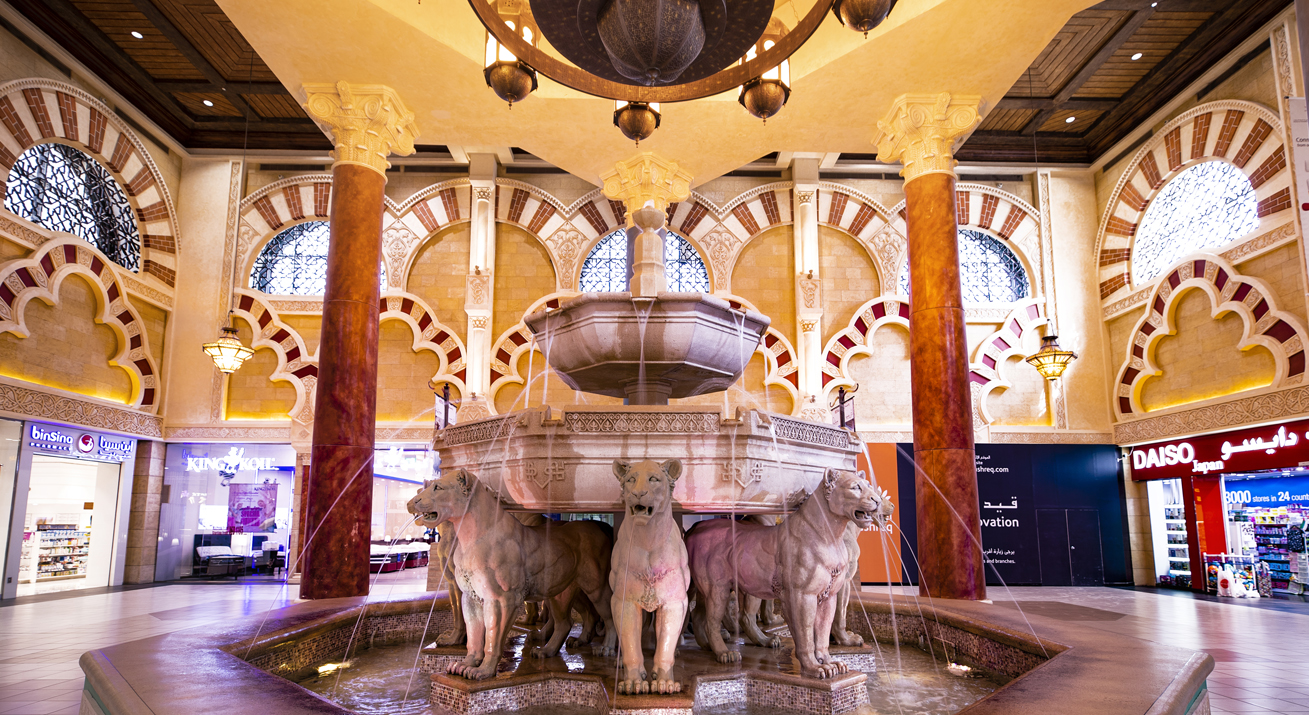
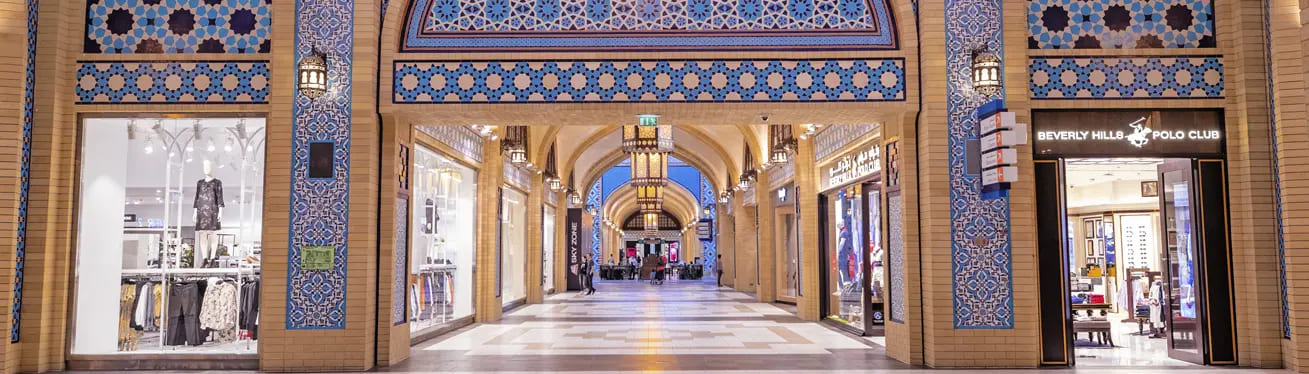
The overall design of the Major Court was based on the Islamic architecture of the Mamluk period in Egypt. The Mamluk Dynasty ruled Egypt from 1250 to 1517 – a period of great cultural prosperity and building activity in the capital of Egypt.
A lithograph by David Roberts, 1849, depicts a bazaar of silk merchants in Cairo. As a reference this image captured the perfect setting for a shopping enviroment and was used as a starting point for the creative effort. The large arcade with pointed arches, stucco plastered finish, and a heavy wood-framed ceiling, are striking features (compare Ibn Tulun’s Great Mosque in Cairo).
Certain details of the design were also borrowed from earlier periods of Egyptian Islamic architecture as Ibn Battuta surely gazed upon all this historic splendor during his visit in 1326.
The two medallions that adorn the central arch that lead to the Minor Court are borrowed from the courtyard façade of the al-Azhar Mosque in Cairo.
Oblong “widows” of light latticed mashrabiya work break up the façade. This is a common feature in Mamluk- Egypt.
Finally, conical wall sconces and majestic lanterns made of brass light up the court to create a true bazaar-like ambience. These were inspired by numerous artistic depictions of madrasas in Cairo showing huge lanterns hanging from the ceilings. The decoration was based on surviving examples of elaborate metalwork artifacts such as cast bronze lamps found all over the Islamic world.
Minor Court and Exterior
Ibn Battuta visited many cities along the Nile on his way to Mecca. All the ancient architectural wonders left behind by numerous Pharaohs must have left a lasting impression on his mind.
The Minor Court and Exterior of the shopping mall recapture all this historic splendour and this is evident in its scale and decoration.
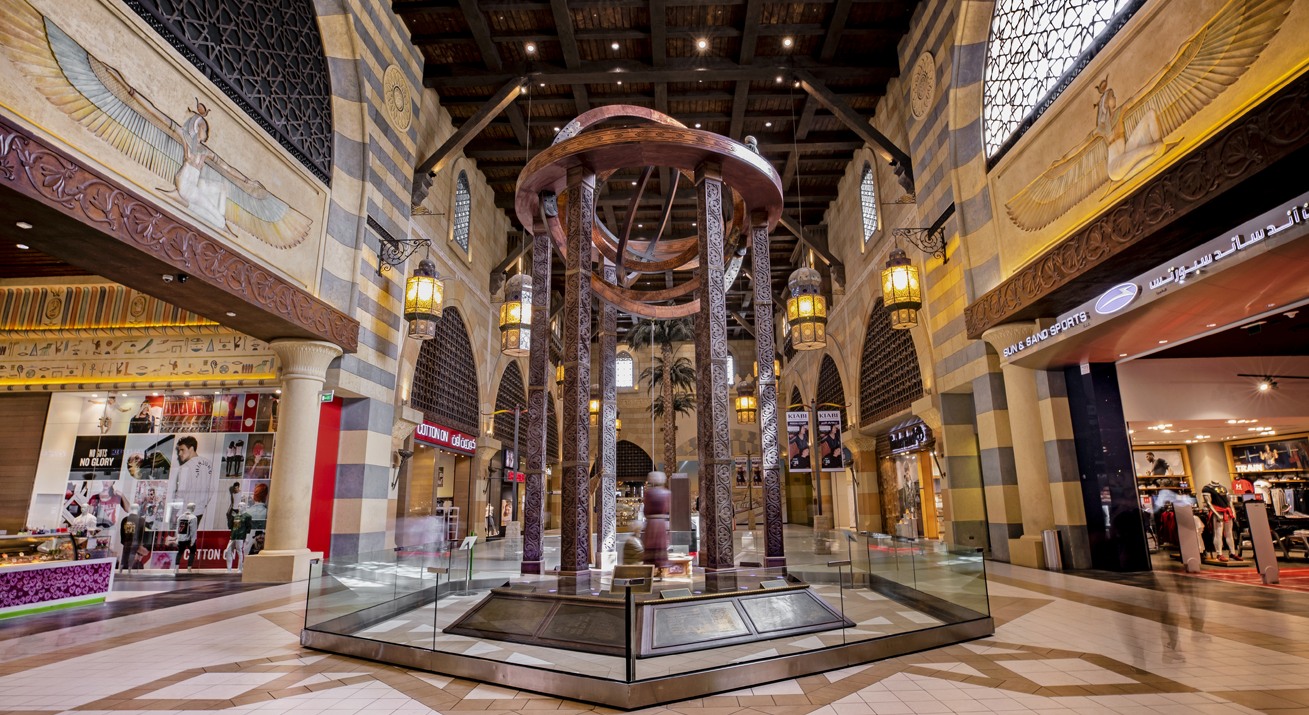
“Papyrus”-columns flank the walls on either side of the exterior. The sandstone walls are adorned with carved hieroglyphics. Similar features can be found in ancient ruins along the Nile River.
The exterior of the Major Court features a stucco wall with Mamluk style crenellations adorning the parapet
At the entrance the passage leads through a colossal sandstone gate. This was based on the Pylon Gates that are the causeways to many of the ancient temples found all over Egypt. It is decorated with scenes of Pharaohs and Gods from Egyptian mythology - all carved in relief.
The interior of the Minor Court is a colorful display of painted frescoes depicting scenes of ancient Egyptian royalty.
“Papyrus”-columns and the wall space above the tenant line are decorated with painted hieroglyphics and crowned with colorful cornice moldings. This pays homage to the typical “Hypostyle Halls” that constituted the interior spaces of numerous ancient temples which has since lost their former beauty and grandeur.
A color palette was carefully chosen based on the paintings found in Egyptian tombs.
Concourses
The idea for the design of the concourses was to create a typical Egyptian market-like environment.
Here Mamluk Egypt again comes into play.
Tops of shop facades are adorned with crenelations. The walls are sandstone or stucco-plastered with a mashrabiya window or a wooden balcony added for variation.
Earthy colors were chosen and freestanding streetlamps and a sky ceiling create the feeling of an outside Egyptian street scene.